
Sh’mini Atzeret: Reconsidering Our Relationship to Time
(Delivered by Rabbi Sacks on October 16, 2022)
If you were alive in the early days of television, you might remember one of the first television game shows, “Beat The Clock.” It actually began as a radio show in 1948 called Time’s A’ Wastin and later called Beat the Time. It became Beat the Clock when it moved to television in 1950. It was originally hosted by Bud Collyer, who was a radio star for his performance as Superman.
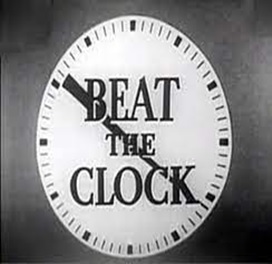
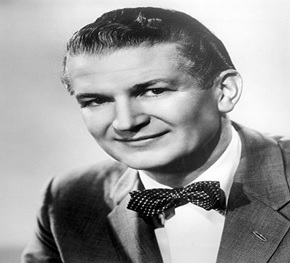
On the show, contestants would be asked to perform an inane stunt, often involving water-filled balloons and eggs, with tools comically inappropriate to the task. Contestants were given instructions destined to lead to frustration, disorientation and failure that began with the words: “Are you ready? You have 50 seconds to…beat the clock.” Only when the clock ran out would a buzzer signal the end of embarrassment.
The show’s popularity was so great that when CBS canceled its run in 1958, ABC picked it up, where it ran well into 1961. It was revived for a year in 1979-1980. In 2006 Ricki Lake hosted a celebration of it. More recently Universal Kids revived it from 2018-2019. So even if you did not see the original, chances are you have heard of it.
“Beat The Clock,” one of the earliest TV game shows, signaled the dawn of a new era, an age of attempting to compress time into smaller and more quickly passing segments–the sound bite, the nanosecond, call waiting, speed dialing, e-mail and more. This technology provides the illusion that we can cram more hours into the traditional 24–day, that we can “beat the clock.”
And, I would propose, it is a theme that is antithetical to the final fall line-up of Jewish holy days that began last night with Hoshanah Rabbah and which we celebrate tonight with Sh’mini Atzeret, and which continues through Tuesday evening with Simchat Torah.
Hoshanah Rabbah is devoted to prayer and study, and sometimes it is considered the day on which G!d finalizes the judgment decrees for the coming year. Sh’mini Atzeret, the last day of Sukkot, is traditionally a day to pray in wonder of rain,[1] and is, additionally, a day of memoriam. Simchat Torah is a festive celebration marking the end of a cycle of Torah reading and the beginning of a new one.
These three appear at the tail end of an intense period of fall holy days. They each have their meaning, themes, and importance, but they are often met with exhaustion from all of the previous High Holy Days and with relief that the long cycle will soon be over. Unfortunately, that reality frequently relegates these celebrations to a second-class status. This is especially unfortunate since they embody an important message about the passage of time that we would do well to consider.
The theme of “Beat the Clock” has infected the work of rabbis and cantors, just as it has that of everyone else. We often hear: “Keep it short, rabbi.” Brides and grooms, mourners, all seem to carry that sad caveat: “Hurry up and bring on the joy.” “Hurry up and get the sorrow over with.” “Hurry up with the celebration.” “Hurry up with the blessing.” “Hurry up with growing up!” “Hurry up with dying.” Brevity has become the major criterion for judging an address or sermon. No matter what the content or its quality, if it is short, it is deemed good.
But the charge given to the Rabbi to “Hurry up” belies a problem we moderns have with emotions, communication, and the use of our time. American culture tells us that sadness is bad, and that expressing it is a weakness. So funerals should be short, and shiva periods should be short. When we listen to such misguided cultural notions, we end up short-changing our grieving process and undermining our own inner emotional systems. And we do so at a price.
Similarly it is damaging when we tell kids to grow up already. In recent times, kids go through an intense application and interview process to get into private elementary schools in Los Angeles. And not long afterward they start to build their resume. Seriously, middle school kids are now overbooked in order not to block their chance to get into “a good school.” They live to beef up their resume, they no longer have time to really just be kids.
In addition to robbing us of a rich emotional life, there is another serious flaw in compressing time. It now allows us to pretend we have all the time in the world. Whereas some now lead rushed lives for the future and don’t have time to breathe, to take it all in, to appreciate quotidian tasks and daily living, others fail to understand the evanescent quality of time as illustrated by the instructive model of Rabbi Milton Steinberg, zecher tzaddik livrachah.[2]
Rabbi Steinberg invites us to Imagine a bank that credits your account with $86,400 each morning but deletes the unused balance every evening. Rabbi Steinberg suggested that each person has such an account credited with 86,400 seconds of life each day. It carries no balance and allows no overdraft; seconds wasted are forever lost. Unutilized deposit results are irretrievable–there is no going back.
Recognizing the value of every moment is illustrated by the Newbery Medal award-winning children’s book, Annie and the Old One by Miska Miles:
A Navajo grandmother, the Old One, announced that when the rug she was weaving was taken from the loom, she would return to Mother Earth. Her granddaughter, Annie, upset at the prospect of losing her adored grandmother, wondered why her grandmother continued to weave on the loom if its completion meant her death. Annie tried to keep everyone away from the loom and even crawled out of bed in the middle of the night to pull the strands of yarn out of the loom one by one. But the Old One was not fooled. She tenderly took Annie aside and said, “You have tried to hold back time. It cannot be done.” When Annie was finally able to accept the reality of time’s inexorable forward march, she responded by saying,’ Now I am ready to learn to weave,’ although she knew that every strand of yarn added to the tapestry would bring her grandmother closer and closer to death.
The triad of fall holiday celebrations serves as a reminder that we cannot “beat the clock” any more than we can compress or hold back time. Instead, they provide an opportunity to step back from the rush of the world.
This sobering thought is both a warning and a gift of this holiday season.
- May we take this gift and ponder our relationship to time.
- May we not feel a need to “beat the clock.”
- May we not try to compress time.
- When we get extra time, may we not fool ourselves into thinking it limitless.
- May we learn to avoid the need to think of “short and sweet” as necessarily good.
- Rather, may we take the time to be present, to strive for what Martin Buber calls, an “I-Thou” moment with our friends, our hearts, our G!d, and with life itself. When we are present, we don’t think about, let alone measure, time.
- Let us worry less about the quantity of time we have on any given day and strive to focus on the quality with which we use our time.
- May the 86,400 seconds we are given each day be precious to us, and savored.
- May we never feel the urge to pull the strands from the looms of our lives.
“Teach us, o G!d, to number our days, that we may gain a heart of wisdom.”[3] “And when our time comes, let us slip into the night demanding nothing, G!d, of others–or of You.”[4]
Amen.
[1] Numbers 29:35.
[2] Rabbi Milton Steinberg (1903-1950) was an American philosopher, theologian, and author. His major enduring works include a novel, As a Driven Leaf, and a primer, Basic Judaism.
[3] Psalm 90:12.
[4] From the poem “This is My Prayer,” by Hillel Halkin (1892/3-1961), from Reflection and Readings for the High Holy Days, compiled by Marc H. Wilson. New York: Rabbinical Assembly, 1989 and reprinted in many places, including the Siddur Sim Shalom prayer book we use on Shabbat and holidays, p. 356.